
Dr. Kedar Joshi
Dr Kedar Joshi: A Vision for Integrative Wellness
Dr Kedar Joshi’s integrative wellness approach explores the connection between stress, nervous system awareness and mind-body balance. Through his multidisciplinary perspective, he promotes a thoughtful and responsible approach to wellbeing.























Dr Kedar Joshi: Reimagining the Future of Integrative Wellness
A Journey Towards a More Complete Understanding of Wellbeing
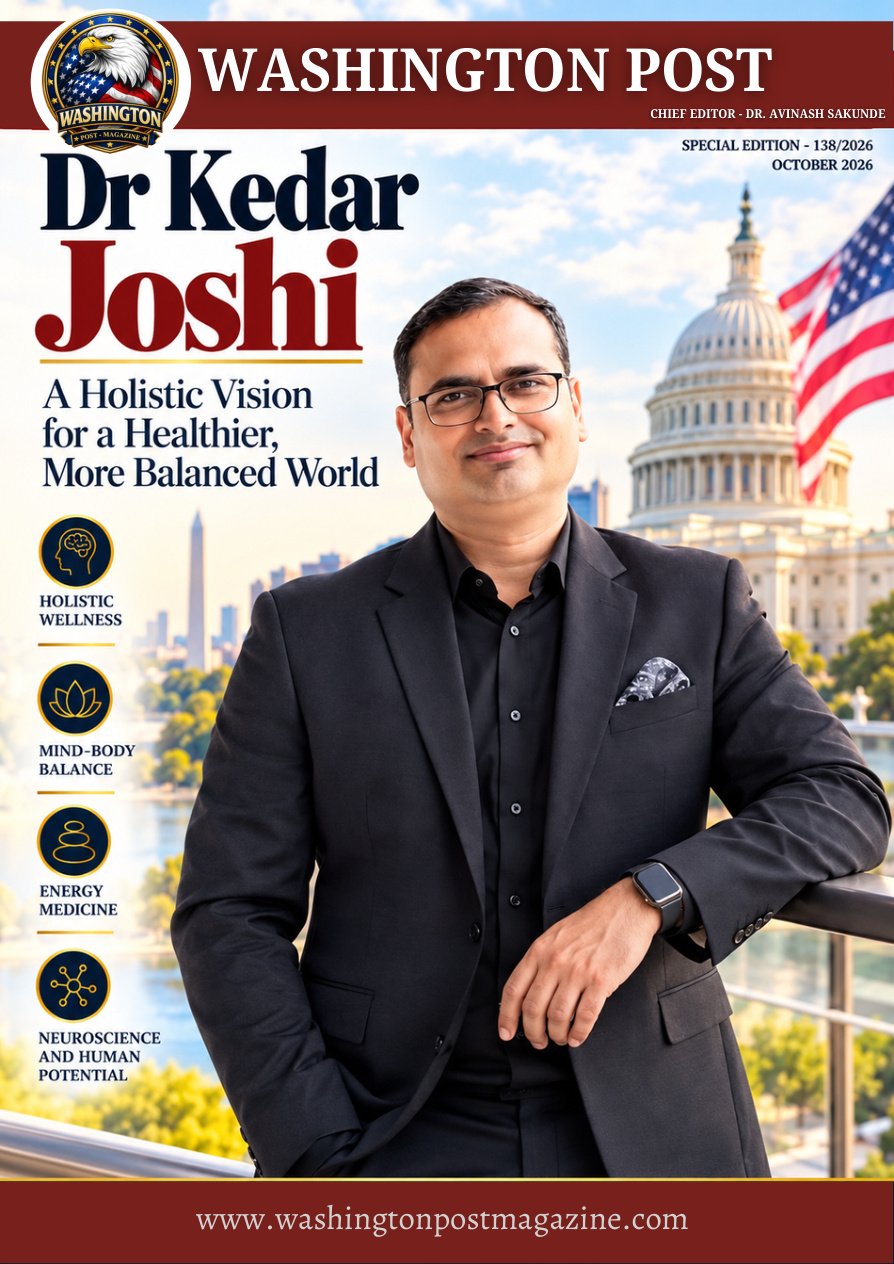
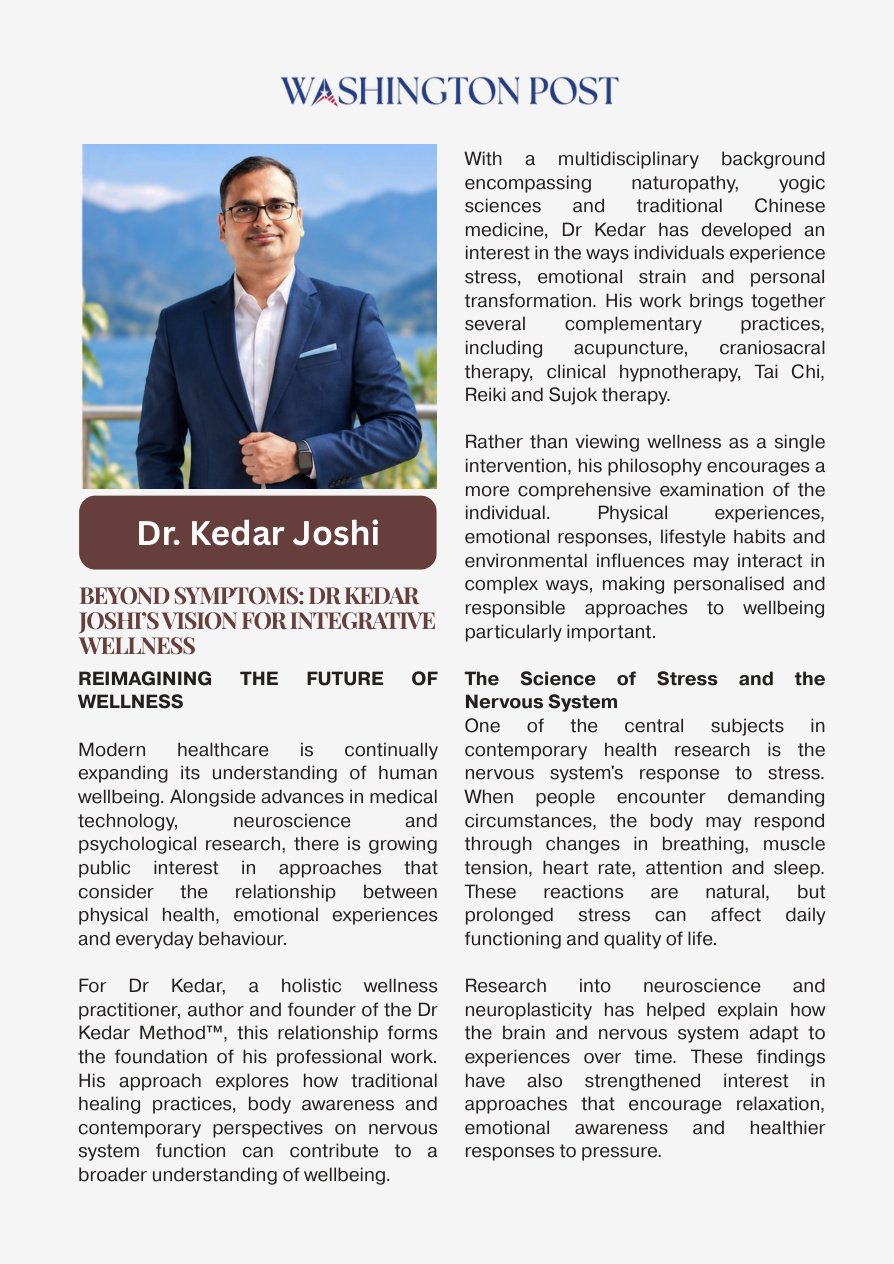
Dr Kedar Joshi is a holistic wellness practitioner, author and founder of the Dr Kedar Method™. His professional work explores the relationship between physical wellbeing, emotional experiences, lifestyle and nervous system awareness.
Featured in Washington Post Magazine, October 2026, Dr Kedar Joshi’s profile presents his interest in bringing together traditional healing practices, body awareness and contemporary perspectives on human wellbeing.
With a multidisciplinary background encompassing naturopathy, yogic sciences and traditional Chinese medicine, his work reflects an interest in how individuals experience stress, emotional strain and personal transformation.
A Multidisciplinary Approach to Integrative Wellness
Dr Kedar Joshi’s approach brings together a range of complementary practices and wellness perspectives. His published profile refers to his work and interests in:
Naturopathy
Yogic sciences
Traditional Chinese medicine
Acupuncture
Craniosacral therapy
Clinical hypnotherapy
Tai Chi
Reiki
Sujok therapy
Rather than viewing wellbeing as the result of a single intervention, his philosophy encourages a broader examination of the individual. Physical experiences, emotional responses, lifestyle habits and environmental influences can interact in complex ways, making a personalised and responsible approach to wellbeing particularly important.
Understanding Stress and Nervous System Awareness
One of the central themes of Dr Kedar Joshi’s work is the relationship between stress and the nervous system.
Modern life can place significant demands on individuals. Stressful circumstances may influence breathing, muscle tension, heart rate, attention and sleep. Understanding these responses can help people develop greater awareness of their own experiences and wellbeing.
Dr Joshi’s work considers how body awareness, relaxation and emotional awareness may contribute to a more informed relationship with stress. His approach also explores contemporary discussions surrounding neuroscience and neuroplasticity.
The Dr Kedar Method™: Structure, Awareness and Adaptation
A distinctive aspect of Dr Kedar Joshi’s professional work is his effort to organise different wellness concepts within a structured framework.
The Dr Kedar Method™ reflects his interest in the relationship between stress responses, body awareness, emotional processing and adaptive change.
His published work discusses concepts including:
Neural mapping
Vagal stabilisation
Somato-emotional release
Heart-brain coherence
Neuroplastic integration
These concepts bring together physiological terminology and complementary therapeutic perspectives. Dr Joshi’s broader objective is to encourage a more systematic and thoughtful conversation about wellness, while recognising the importance of scientific evaluation and responsible communication.
Beyond a One-Dimensional Approach to Wellbeing
Modern wellbeing involves many interconnected aspects of life. Sleep, physical activity, meaningful relationships, psychological support and access to appropriate healthcare can all contribute to an individual’s overall health.
Dr Kedar Joshi’s approach recognises that complementary practices may provide some individuals with opportunities for relaxation, reflection and greater body awareness.
At the same time, a responsible integrative approach recognises the importance of qualified care, medical assessment and evidence-based treatment where appropriate.
Healing Environments and the Human Experience
Wellbeing is influenced not only by personal choices but also by the environments in which people live, work and rest.
Factors such as noise levels, lighting, temperature, privacy, access to nature and opportunities for quiet reflection can shape how a space is experienced.
Dr Joshi has also explored the relationship between sound, energy, consciousness and environmental design. His interest in this subject connects wellness with architecture, hospitality and the design of everyday spaces.